
From Extractive to Regenerative: The New Business Strategy for Sustainable Growth
By Dr. Kasthuri Henry · February 23, 2026 · 4 min read
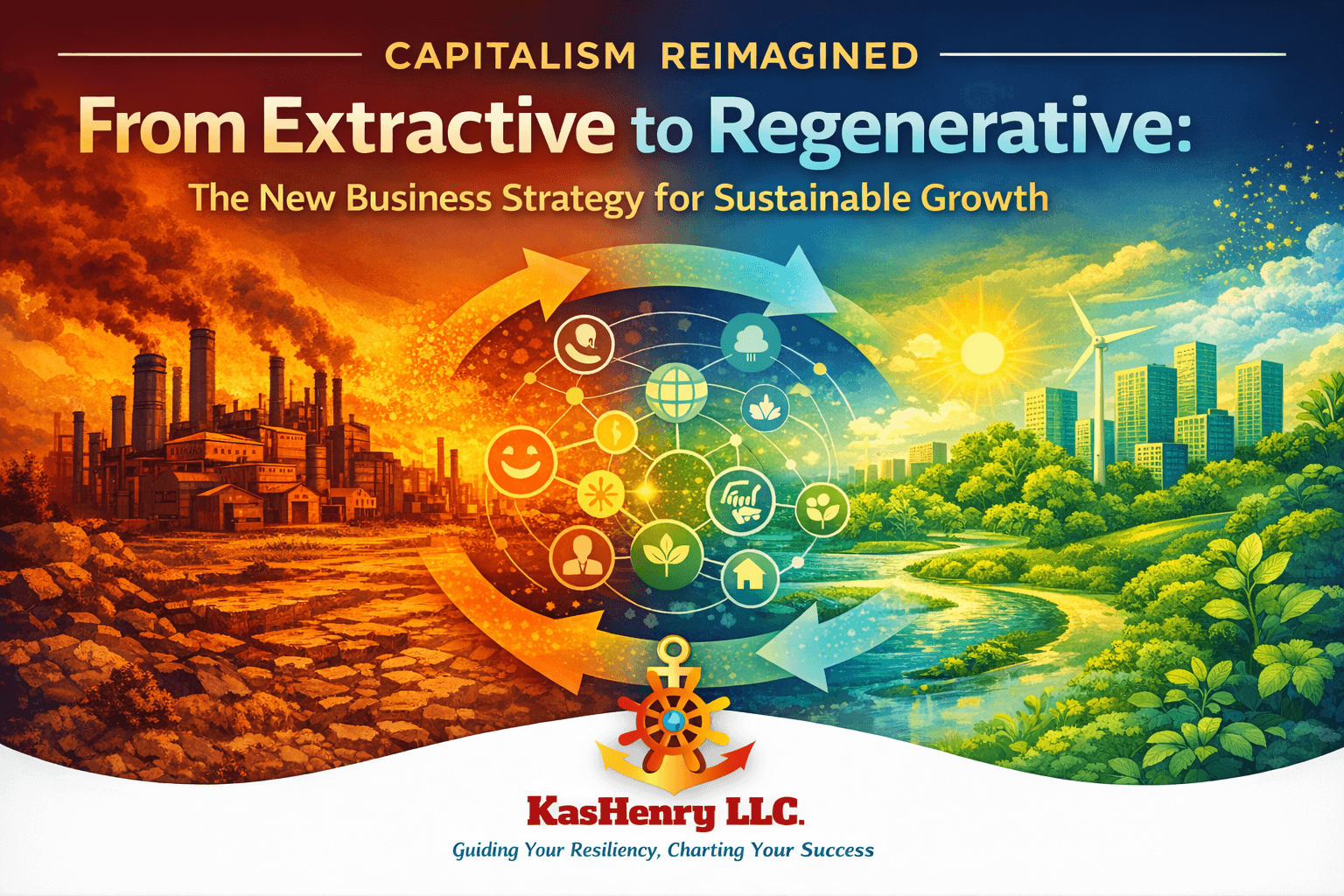
For decades, the dominant logic of business has been simple: extract resources, maximize output, push costs down, and return profits to shareholders. This extractive model helped fuel industrialization, global trade, and unprecedented wealth creation; but it also left behind fragile supply chains, ecological imbalance, disengaged workforces, and widening social rifts.
Today, businesses are waking up to a truth long understood in communities and ecosystems around the world: sustained prosperity is impossible in a depleted environment, whether that environment is ecological, financial, or human.
To thrive in the next decade, business strategy must shift from extraction to regeneration.
At KasHenry LLC, our work in resilience-building, conscious leadership, and transformation has consistently reinforced one insight: healthy systems create healthy outcomes. This is the philosophy that underlies regenerative strategy.
Why Extractive Models Are No Longer Viable
- Economic volatility exposes structural fragility
Lean, low-cost, efficiency-maximizing systems crumble when the unexpected strikes, from pandemics to geopolitical shifts to AI-driven disruption. Extractive logic optimizes for today's earnings, not tomorrow's adaptability.
- Ecological limits are no longer theoretical
Resource depletion, waste accumulation, and climate impact now impose real financial risk. Supply chains, insurance markets, and investor expectations are already shifting accordingly.
- Human capital is exhausted
Burnout, disengagement, and talent migration are signals of an overextracted workforce. Emotional resilience, a core pillar of KasHenry LLC's mission, is impossible in systems that treat people as expendable.
- Zero-sum thinking suppresses innovation
When winning means someone else must lose, collaboration, partnership, and cross-sector solutions become impossible. Yet these are exactly the capabilities the next economy requires.
Extractive capitalism is not merely outdated. It is economically hazardous.
What Regenerative Strategy Really Means
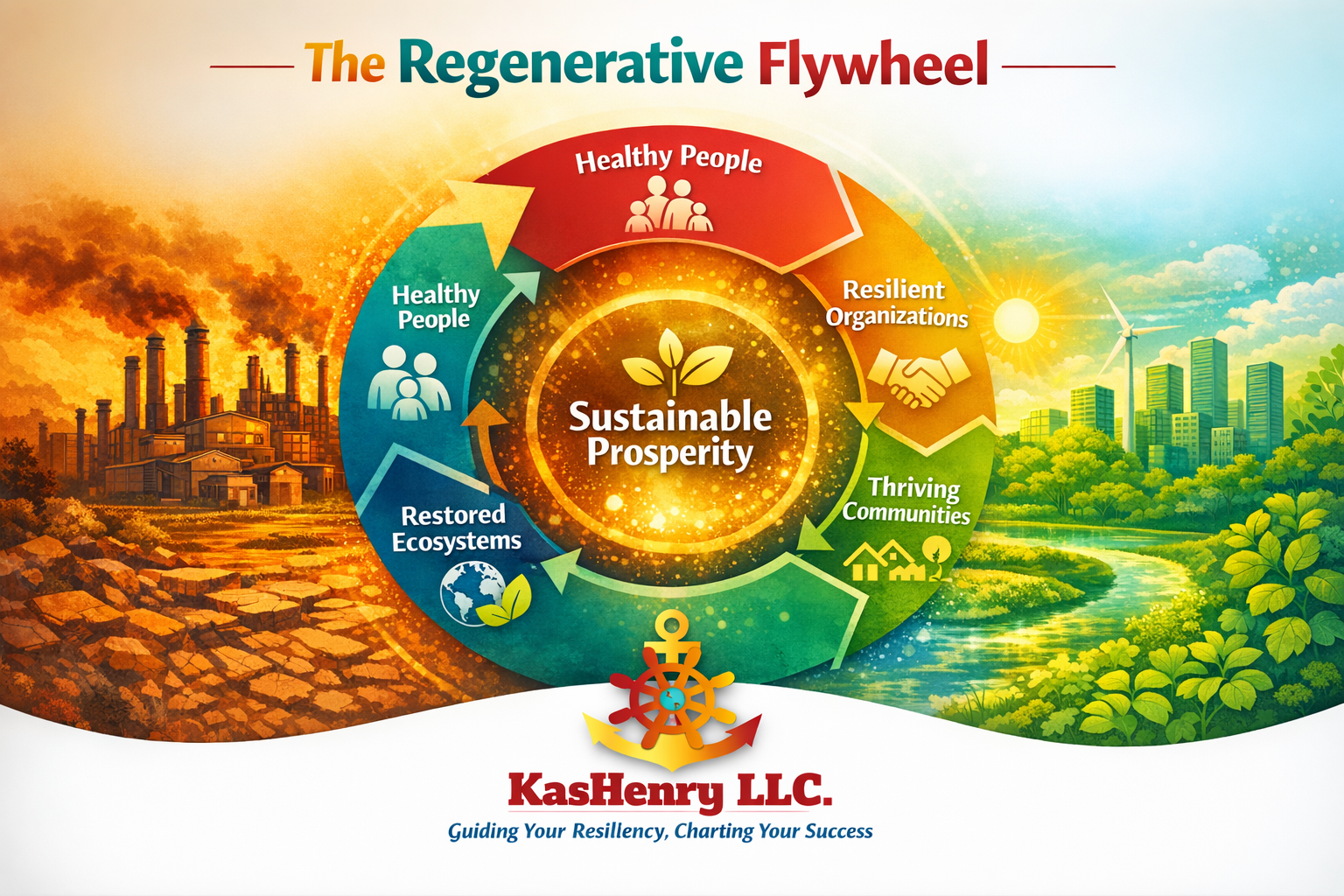
Regenerative strategy builds systems that restore, renew, and expand value. It is capitalism designed for endurance, not exhaustion.
It moves value creation from a linear sequence to a circular and interconnected ecosystem.
Core Principles of Regenerative Business Models
- Circular Value Creation
Waste becomes input. Products are designed for lifecycle extension. Materials circulate. Processes mimic ecosystems where nothing is lost, only transformed.
- Stakeholder Enrichment, Not Exploitation
Instead of minimizing labor costs, regenerative businesses grow human capability, emotional intelligence, and financial resilience, all central to KasHenry LLC's frameworks.
- Long-Term System Health as Strategy
Regenerative models consider the vitality of every connected system: employees, communities, ecosystems, finances, and future generations.
- Distributed and Inclusive Prosperity
Instead of accumulation at the top, regenerative systems ensure access to opportunity, capital, education, and mobility. This aligns deeply with our mission to "build to last and ennoble for success."
- Continuous Learning and Adaptation
Regeneration requires real-time intelligence. Businesses must embed learning rhythms, cross-functional collaboration, and continuous improvement, areas where KasHenry LLC excels in organizational transformation.
The Circular Economy as a Competitive Advantage
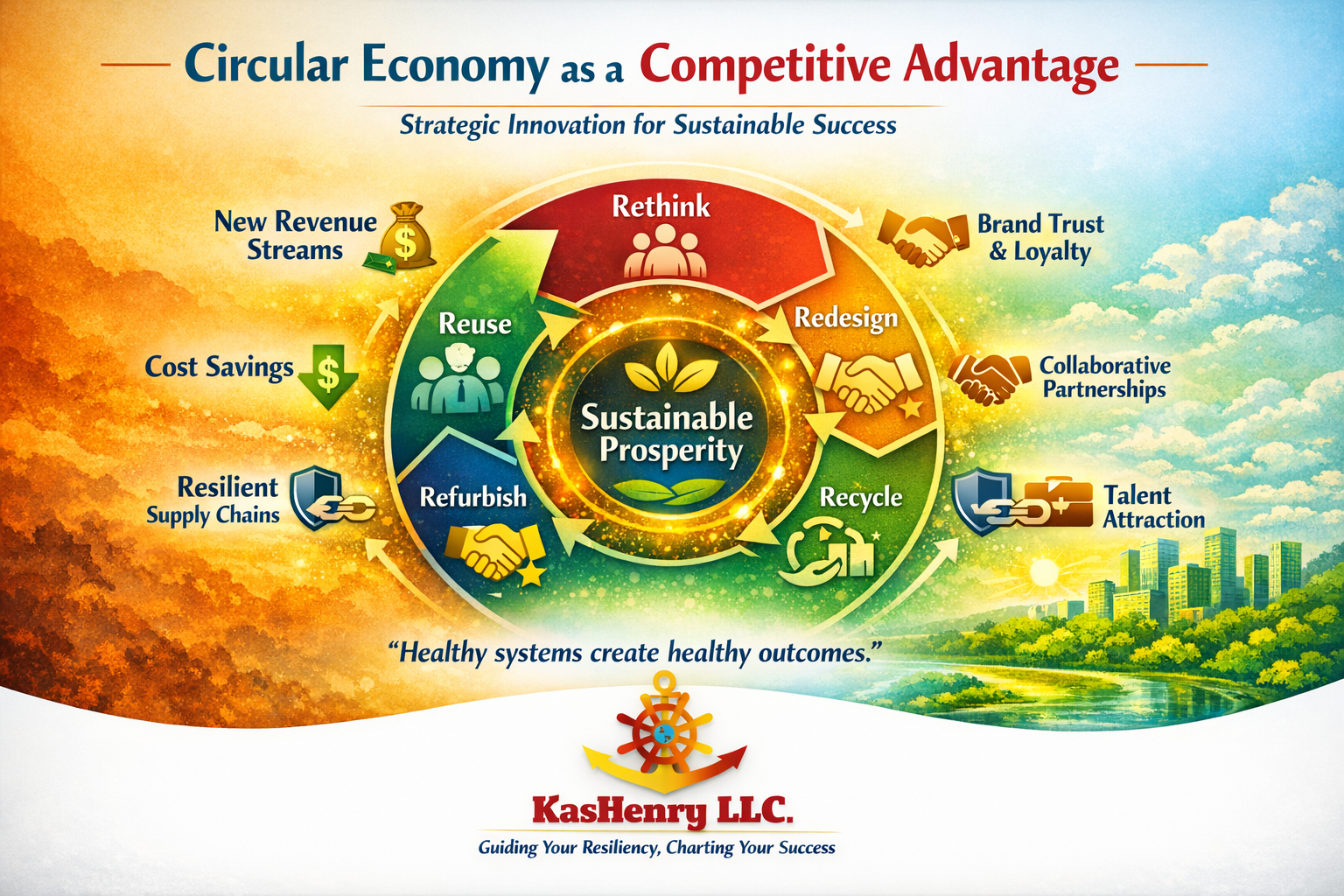
A circular economy is not just environmental stewardship. It is strategic innovation, unlocking:
- New revenue streams through reuse, refurbishment, and service-based models
- Cost savings from reduced materials and waste
- Reduced risk through more resilient supply chains
- Stronger brand trust from demonstrating values in action
- Cross-industry partnerships created through shared circular platforms
- Talent attraction as people seek meaningful work with ethical companies
The circular economy is a better business model, not merely a better conscience.
From Zero-Sum to Regenerative Mindset
At the heart of this transformation is a shift in worldview:
- From control to collaboration
- From competition only to coopetition and ecosystems
- From scarcity thinking to abundance creation
- From optimizing positions to optimizing systems
Regenerative capitalism understands that value expands when systems flourish.
This perspective aligns deeply with the thought leadership of Dr. Kas Henry, who teaches that economic and emotional resilience are inseparable, and that healthy organizations begin with healthy people.
How Businesses Begin the Transition
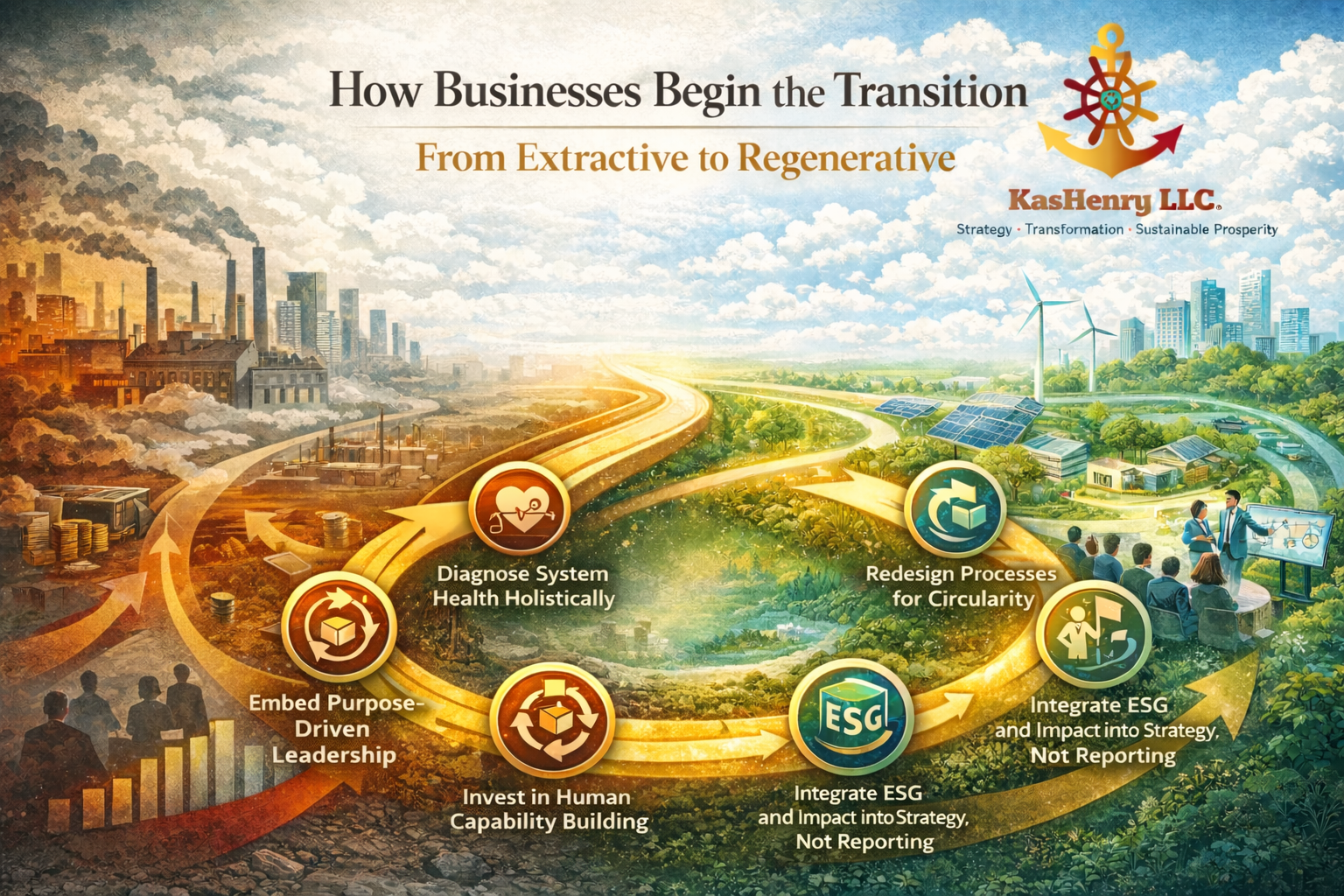
Here is a practical roadmap grounded in KasHenry's transformation methodology:
1. Diagnose System Health Holistically
Evaluate not only financial metrics but human resilience, cultural vitality, environmental impact, and stakeholder trust.
2. Redesign Processes for Circularity
Reduce waste, reimagine product lifecycles, and build partnerships for reuse or shared-value models.
3. Embed Purpose-Driven Leadership
Regeneration requires ethical, emotionally intelligent leaders who can navigate complexity and inspire collective action.
4. Invest in Human Capability Building
Upskill teams in adaptability, strategic thinking, digital literacy, and emotional resilience, the foundation of a regenerative workforce.
5. Integrate ESG and Impact into Strategy, Not Reporting
Move beyond compliance and use ESG as a design principle for growth.
6. Build Regenerative Financial Structures
Reinvest locally, prioritize stable long-term returns, and design capital deployment that supports enduring system value.
The Future Belongs to Regenerators
The next era of capitalism will not be shaped by those who extract the fastest, but by those who regenerate the most intelligently.
It will be led by:
- CEOs who understand that people are not cost centers but value creators
- Corporations that see ecosystems, not supply chains
- Investors who prioritize continuity over volatility
- Communities that measure prosperity by well-being, not just income
- Leaders who recognize that ethics and strategy are inseparable
This is the vision of Capitalism Reimagined. A framework rooted in human dignity, emotional resilience, shared prosperity, and long-term value creation.
And it is the work we proudly advance at KasHenry LLC: helping individuals, leaders, and organizations build systems that last, evolve, and elevate.